
















NASA is preparing for humans to go further than they ever have before in space research. Through specialized programs, NASA is trying to send humans back to the moon for the first time since the 1960’s. From November 16, 2022, to December 11, 2022, NASA conducted a successful uncrewed mission called Artemis I, which orbited the moon for six days. Following the success of Artemis I, NASA had planned to conduct another mission, Artemis II, sending four astronauts around the moon in early 2026.
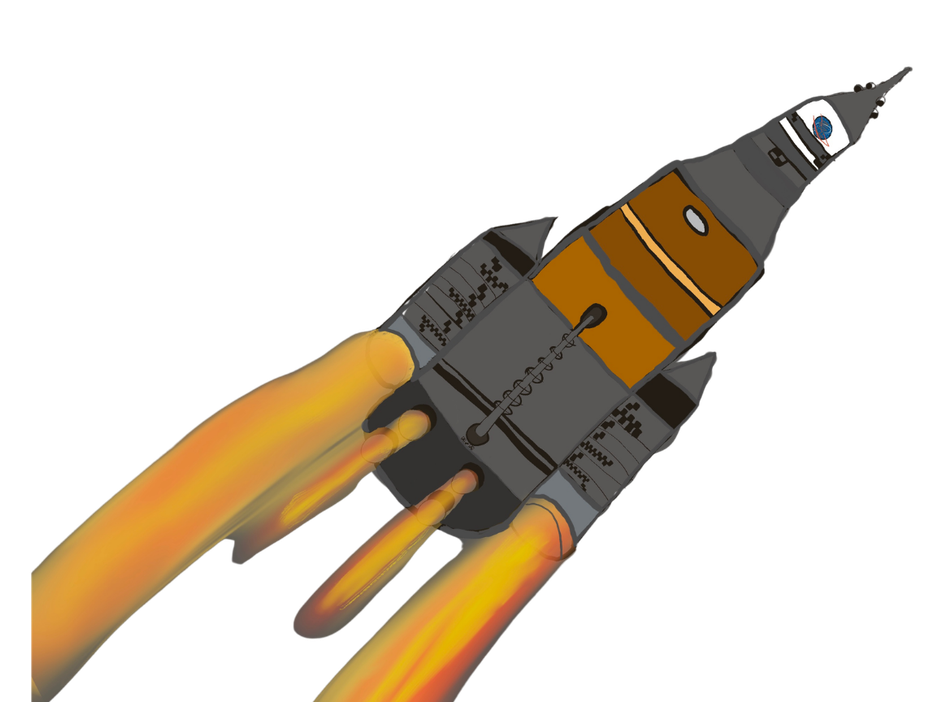
However, in early February, technical issues with the Space Launch System Rocket were found during an investigation. On February 25th, after a conference, NASA announced that the Artemis II mission had been pushed back to no earlier than April 2026, and the SLS rocket was rolled back to the Vehicle Assembly Building for repairs. Since then, NASA has announced that it has added another mission, Artemis III, to its Artemis lunar exploration program. This will be its second crewed mission, scheduled to take flight in 2027.
NASA’s Artemis program’s objective is to send humans back to the moon. Following Artemis II, NASA has planned to carry out more missions in the program, with Artemis IV scheduled for 2027. Artemis V is scheduled for 2028, Artemis VI is scheduled for 2029, with other missions like Artemis IV, V, VI, and X happening yearly after that. Besides the Artemis program, NASA plans on conducting other missions such as the Nancy Grace Roman Space Telescope launch in 2026 to study exoplanets and dark energy, the Mars Sample Return campaign also starting in 2026 and the Dragonfly rotorcraft mission to Titan in 2028.
These missions aim to establish NASA’s long-term presence on the Moon and act as a stepping stone for future missions to Mars. “These missions are important for new technological discoveries and advancements,” said GCHS Freshman Adrian Monroe, who is well-versed in science and has an interest in space. “By sending humans back to the Moon, it can help NASA with space travel to other planets, and it could also be really helpful for them to find a way to keep learning about space.”
NASA is pushing the boundaries of space exploration like never before. For the first time since the 1960s, NASA is sending humans back to the moon. By doing this, they are paving the way for scientists to find new discoveries about the evolution of the Earth, the solar system, and the sun; as well as economic opportunities through building a long-term presence on the moon, serving as a proving ground to eventually send humans to Mars and beyond, and by inspiring the next generation of engineers and scientists.