

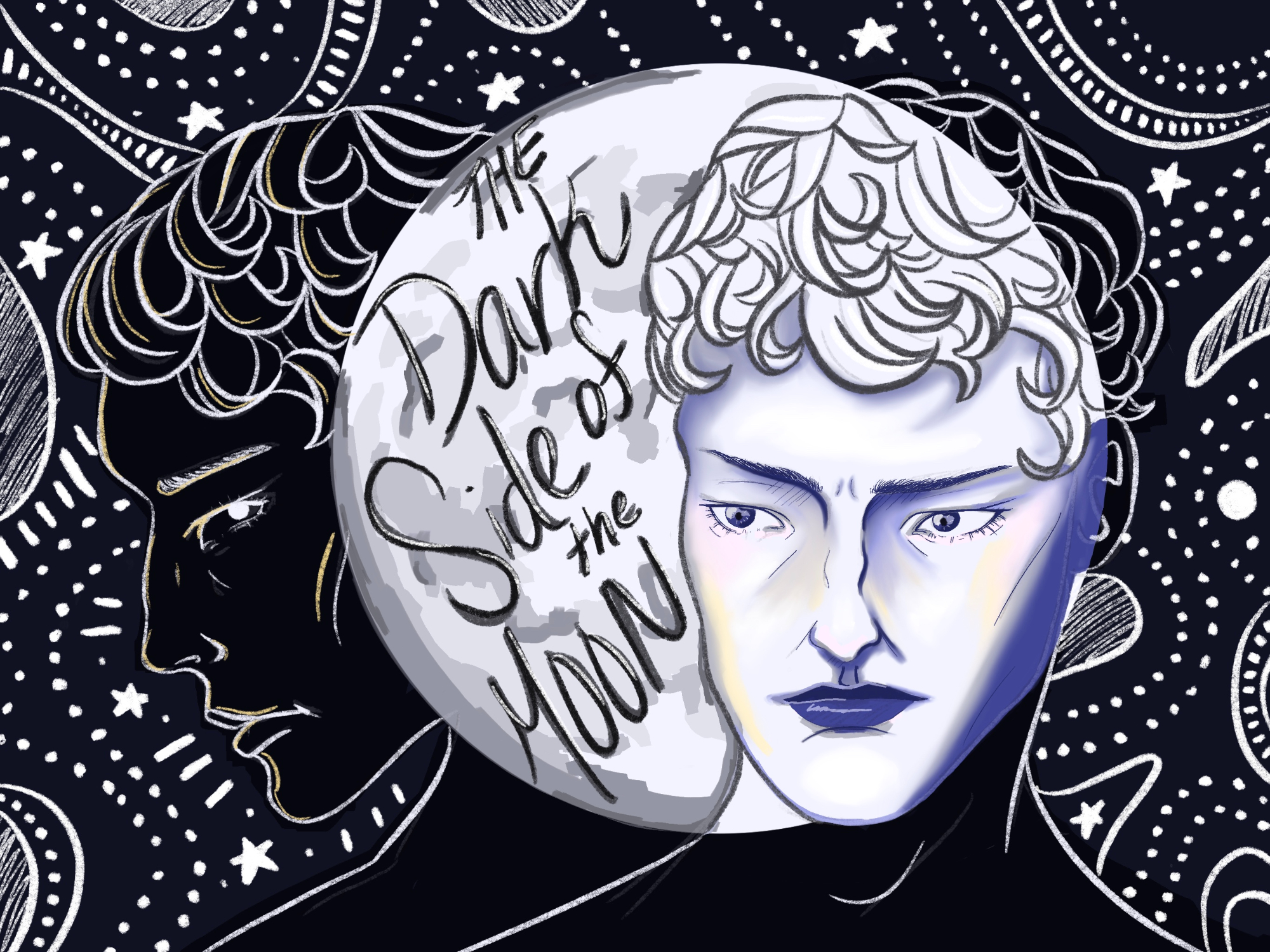
On the dark side of the moon, there is a part humanity cannot see. From where we stand, judging the universe above, we focus only on the brightest parts. Yet, we still yearn for the moon to rotate and show its dark side, and turn right to complaining when the world becomes darkened by raw truth.
American culture prides individualism as a key principle that keeps our society functioning. The start of individualism dates back to the Age of Enlightenment. Americans were being encouraged to make their own decisions and stand up for their own rights. This mentality even encouraged the colonists to claim the United States of America, the land becoming a catalyst for self discovery and rebirth. During that time period, the idea stemmed from Enlightenment ideals and encouraged people to act on their own beliefs. Americans were encouraged to embrace their individuality and make choices for themselves. As America has developed into its own society, the push for individualism has warped into something else. In theory, the idea is that to be an individual, you must be your true authentic self; however, it’s rare to hear people talking openly about the parts of ourselves that aren’t socially acceptable.
Modernly, individualism comes in many different forms, one being the saying “stand on your own two feet.” It essentially means not relying on other people and being able to provide for yourself financially, mentally and physically. For some people, it means making sure they can take care of their own mental health and not have to rely on loved ones or friends.
In today’s society, there is a focus on being who you are. We have come extremely far from how small-minded our views in America used to be, now openly telling people to be their true selves. Even though our society was built completely on the idea of being independent from other people and large majorities, we segregated and ostracized people for just that. Our views on individualism back then were completely based on hypocrisy and rarely had much to back them.
Humans aren’t perfect creatures. We openly discuss how we, as a society, hunt animals that we have no business hunting. How we are responsible for the warming of the earth and even the creation of deadly weapons to be used against one another. However, the second the topic is brought up amongst the masses outside of the higher classes, it’s shut down without another thought. From adolescence, society pushes the idea that we have to hide our flaws and that the people around us don’t have any to begin with.
English and AP teacher Mr. Schmitt comments that, “we got to a place where we can’t extrapolate reality from the representation of reality.” Modern culture today has a habit of showing us only the positives of everything we see. From advertisements, to influencers on social media curating how they are perceived by the public. This mentality has been adopted despite the preach for individuality, especially in America. By pushing away the “negative” flaws we carry, are we truly embracing every part of who we are? It’s not a sin to make a mistake, and it’s not wrong to accept parts of ourselves that aren’t socially acceptable. Even the greatest people in society have had flaws and made mistakes.
Human nature has always been known to crave attention and validation from others, yet no matter what, we still strive for individuality. Society has shifted to preach more and more for mental health, encouraging people to take initiative for their own well being. American culture, in specificity, wants to see people outwardly being “healthy” and exuding socially acceptable behaviors. This exact mindset is what makes our culture so toxic. By only pushing the agenda of being perfect, we begin to think that that is exactly how we should be as well.
Every person we meet, everything we consume, something will always be seen as negative. However, negativity is subjective. Whether or not this person is bad, or another person has done a bad thing always depends on the eyes of the beholder. Even acknowledging our own faults is subjective, however the moment we push those dark parts of ourselves away is the moment we lose our humanity. We aren’t who we truly are without our flaws. Every single person in the history of Earth has made what one would consider a mistake. Those mistakes are exactly what shape us into the people we are, the people we love, and the people we accept. At the end of the day, “there is no dark side of the moon. Matter of fact, it’s all very dark.” We should be searching for the darkest parts of the moon, the unknown, rather than being scared of it.