

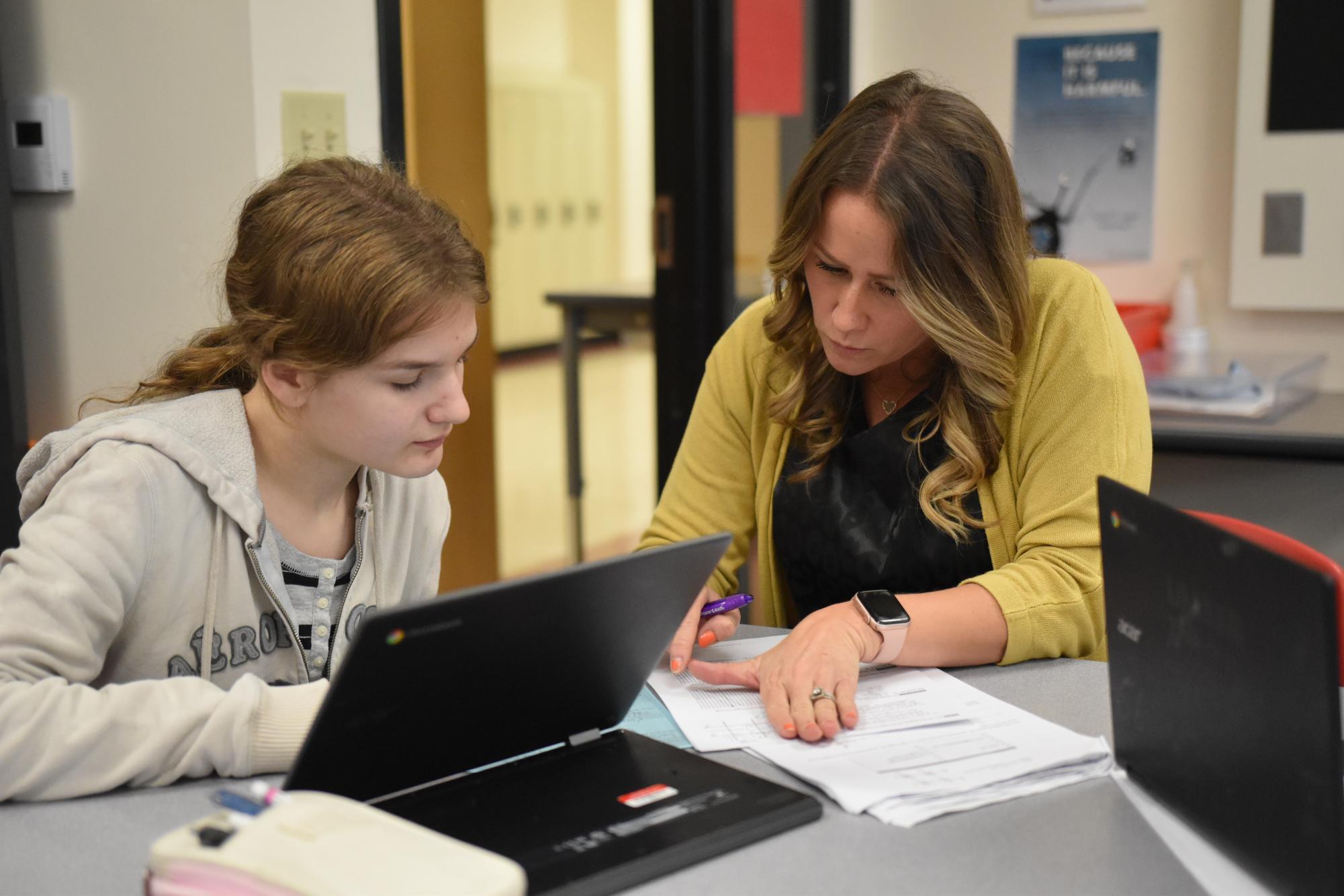
Adrian Sherko, a geometry teacher at Grant Community High School, is known for her unique teaching style and the personal connection she makes with her students. She was inspired to teach by her family and her own teachers, and hopes to create lessons that stick with students beyond high school. However, her motivations also led her to another achievement: a new way of teaching in a department fairly standardized.
Sherko wants students “to take a more active role in their learning — collaborating, engaging in problem solving, and exploring ideas,” and has designed lessons that encourage participation so students feel a sense of ownership, pride and excitement that helps them better understand and retain concepts.
By changing the way the classroom is traditionally structured, her lessons begin with the essential building blocks, just enough to get students started. She might model the steps of an equation or clarify the goal of the day’s task, but then she steps back. Students scatter to the whiteboards that line her room, each tackling a problem on their own. From the center of the classroom, Sherko watches them work. She moves from board to board, offering quick feedback or a small nudge in the right direction, reinforcing when they’ve landed on the right idea.
The change has been noticeable. Going from a step-by-step standard of teaching and treading into new waters was terrifying, she reflects, though she feels that it was a lot easier with the students’ help.
“I found out that most students have this very intrinsic motivation to figure things out, and without that, my way of teaching wouldn’t work.” Sherko values the relationships she is able to build with students, and her main hope is for students to walk out of her classroom satisfied with the classroom work ethic, dynamic and the social skills they developed working at the white boards.
“Sherko creates an entertaining environment for students. It was never a boring class period,” shared junior Sam Astorino, a former student of Sherko. “Out of any math class, I remember hers the best.”
Astorino also feels that she was able to help way more one-on-one. “I struggled to ask questions to most teachers. I hated being the kid to have to speak out and sound stupid to my peers. Every time Sherko would walk up to me and one-on-one help me, it made math way easier for me.” Ultimately, Astorino felt that she prepared them for future math classes and that she knew exactly how to be more than just a teacher, but a friend to her students.
Sherko changed how geometry was for her students, creating a welcoming, fun environment. She taught more than just math, but important life skills, like cooperating with others and problem solving skills. Sherko has altered the course for her students far into their math career and beyond. Astorino notes, “While I’ll miss her class, she taught me in ways that have assisted me this whole year. No class has compared to her.”